Not Your Average Holiday Dog Safety Post

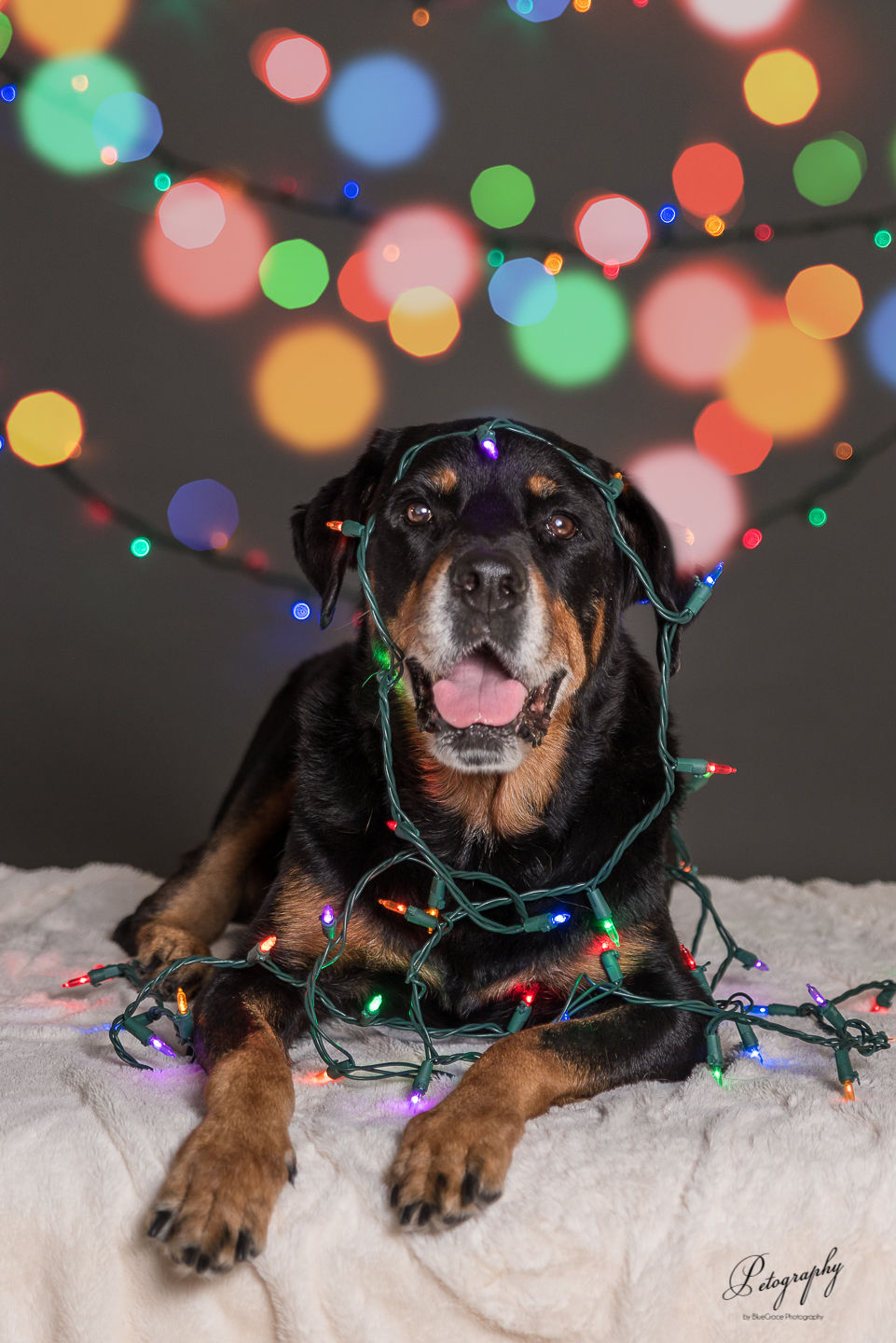
Every holiday there’s a lot of posts, blogs, and infographics that get shared and passed around on the dangers associated with the holidays - things like keeping chocolate out of your pets’ reach and reminders to make sure their microchip information is up to date.
But for this holiday, I’m not here to tell you that poinsettias are toxic to your dogs (even though, yes, they are). I’m here to look at other safety precautions to take when it comes to your dog’s behavior - especially if they are already challenged with aggression, fear, and/or anxiety.
⏰ Try to keep your daily routines.
To the best of your ability, I recommend to try and keep your daily routines as consistent to “normal days” as much as possible, ESPECIALLY if you have a dog working through separation anxiety.
When dog owners have a lot of time off from work, and they sit around at home with their dog or take their dog everywhere with them for two weeks, it can cause a big regression in their separation anxiety behavior modification plan once life turns back to normal and everyone returns to work. All the time and attention that was received has a drastic contrast with being left alone for 8+ hours a day again.
Trying to keep routines doesn’t have to be crazy. You don’t have to confine your dog for 8 hours like you would on a work day. Instead, maybe just practice confining them and/or leaving them alone for an hour or two each day. Something is better than nothing and a little bit of independent time is enough to keep your training in a forward momentum.
🍭 Keep all candy out of your pet’s reach.
Ok so this is my one generic point in the list! Not only are things like chocolate and xylitol toxic to our cats and dogs, but the wrappers themselves can be dangerous. Every year, veterinary hospitals and veterinary ER’s get cases where dogs come in because they ate a bunch of candy. Don’t let that be you - it hurts your dog and it hurts your pocket.
Another side note to consider is that when a dog gets into candy, they can perceive it as a valuable resource and then start fights with other dogs in the household or display aggression towards their owners if someone tries to take it away. I’ve seen it happen and it’s just another reason to keep it all out of their reach.
This ALSO includes your trash! All of those wrappers from chocolate peppermint trees and chocolate Santas post consumption still have residue and can attract the attention of our cats and dogs. Be smart with where you stash it and trash it.
🥘 If your dog doesn’t have manners in the kitchen, set a boundary.
Holiday time usually has a lot of people cooking. Which also means that there is a large amount food laying around on counters and tables, often times unattended as well. People are busy and distracted, so that creates the perfect opportunity for dogs who counter surf.
If counter surfing has been an issue for your dog, it’s better to keep them out of the kitchen during holiday cooking since this is typically not a time where you have the bandwidth to train.
Utilizing gates, crates, and leashes to keep the dog out of kitchen while holiday cooking is occurring will prevent practice of the very behavior you don’t want (until you have the time to work on it) and most importantly will prevent the dog from getting that massive jackpot of a reinforcer (the food!)
Also, if you have multiple dogs that have ever fought over food resources in the past, this is another good reason to keep them out of the kitchen entirely. Holiday cooking often creates a lot of “oops” moments where food spills over onto the floor or gets dropped. These are prime moments for dogs to resource guard and with the added distractions that owners have, it’s very possible for them to not realize what’s happening until it’s too late.
The kitchen doesn’t have to include the dogs!
🎁 Avoid gifting food items to multiple dogs while they are out together.
Every year while working at the veterinary ER we would see dogs come in for fighting with one another and it would be the same story over and over again: the owners gave each dog their own “bone” (or some other similar high value edible food item) as a gift and then they got into a fight over the bones.
This is totally preventable by only gifting dogs their own high value food items while they are separated and in their own safe spaces. This way there is zero competition between the dogs and they can enjoy their gifts in peace. At the end of the day, I like to my treats in peace, too.
🎅🏻 Remember that pets can naturally find costumes to be threatening, not funny or amusing.
I’ve heard many of the same stories from new clients right after the holidays … “My dog bit my friend who came over to the house and he knows him.” And then when I ask further questions, I find out that the friend came over to the house dressed as Santa, then greeted the dog… sigh.
Seeing people in costume is not the norm for most dogs. They can become confused, scared, or even defensive. They don’t understand that this is a fun annual event that we are partaking in. Therefore it’s important to NOT force your dog into being pet by “Santa” or force them to get close for pictures. What appears harmless to us can appear very dangerous to them. While of course there are exceptions to the rule and there may be individual dogs who are accustomed to this type of activity, honor your dog and their natural instincts.
🌲 Keep dogs who are still destructive away from Christmas trees, ornaments, and gifts.
If you’re still struggling with destructive chewing then Christmas trees present a big challenge. The whole area of presents, wrapping paper, tinsel, and hanging objects from a tree can just be too much for young dogs or dogs who are still learning rules and boundaries in the home.
The easiest solution for this when you are not actively training and supervising the dog is to place gates or an x-pen around the tree. While we typically think of x-pens to keep dogs “in” somewhere, we can also use them to keep dogs “out” of somewhere. And they’re the perfect option for function, saving time, and avoiding intestinal blockages.
🚙 Secure your dog if you take them to “look at lights” in the car.
Many families enjoy riding around in the car to look at holiday lights and often times like to include the dog. That’s great and most dogs love the car so any excuse is a good reason for them to join you. But - make sure they are secured via a seat belt, tether, or crate.
When you roll the window down to get the full effect of the lights, it’s very easy for any dog to jump out of the car from excitement, not to mention while displaying aggression towards something or someone. And like many holiday activities, people tend to be distracted and are less likely to notice that something might be wrong.
Securing your dog is for the safety of them as well as everyone else enjoying the same activity.
🏠 Remember that it’s not normal for dogs to “visit” other dogs in their homes.
Even though it’s a regular part of the holidays for us to visit our friends and family in each other’s homes, that’s not something that is perceived as normal for dogs
In the wild, if a canid from one pack family unit left and went to “visit “another pack family unit” they would be killed or driven off at best. Why? Because pack family units live within the boundaries of their own territories. The only reason that they would extend past their own territory is if their resources were scarce and they needed to in order to survive. And if that were in fact the case, they all would be ready to fight for survival. They would never leave a territory just to go visit another territory to be friendly. A visitor only means one thing to them in that moment: a threat.
Even though our dogs are domesticated, this is still a very hardwired instinct. Majority of dogs are very territorial of their home. So to walk into one dog’s home with another dog - whether they happen to be family through their human counterparts or not - is most often going to be seen as a threat and can potentially result in a fight.
As with everything, there’s always exceptions to the rule, especially if a dog frequents another home enough that they view it partially as their own as well. But I hear from so many clients that for just the few days out of the year that they travel during the holidays to visit family or friends, they want their dog to join and get along with their family or friends’ existing dog. The juice isn’t always worth the squeeze in those situations. To do a slow introduction would take a lot of time, attention, and work that most people aren’t willing to do because that’s not why they are visiting other homes in the first place.
Resolutions for this are fairly simple. Boarding and pet sitters are options if you can leave your dog behind. If you must travel with your dog, then there’s always the option to stay in your own place or, at the very least it is absolutely doable to stay in a home with another dog and do rotations of who is out with everyone while still keeping some separation.
The biggest issue with this one is just lack of appropriate expectations for what is normal versus not normal between dogs who don’t know each other.
👥 Your dog with a history of displaying aggression towards guests doesn’t need to meet every aunt, uncle, or cousin at the party.
If your dog displays aggression towards strangers (whether you’re actively working on a behavior modification plan or not) the holidays can be a challenge because as discussed previously, we tend to do a lot of traveling to our family and friends homes during this time.
If you’re having family visiting that only come to visit you once or maybe twice a year, this is another situation where the juice may not be worth the squeeze. We never get better at something if we only practice it a few times a year.
The other time where keeping the dog separated is an intelligent option, is when there’s a big party and/or a lot of alcohol. When people start drinking, they don’t make good choices. This is yet again another scenario that I hear often from clients - the dog was “fine” at the party until Uncle Joe went to go kiss the dog in the face or Aunt Susan stepped on the dog with her high heels. People get sloppy and intrusive with dogs when they drink and it’s so easily preventable by keeping the dog separated and safe ahead of any incident. I make this suggestion for any dogs who have any little bit of hesitation, avoidance, or suspicion around guests.
These situations also benefit from utilizing a boarding facility so that everyone is less stressed and more safe. And if that is not possible for whatever reason, there is also always the option of keeping some type of barrier between the dog and the guests such as a crate, door, gate, and/or leash.
It’s nothing personal to the family and friends visiting, it’s just that most people don’t have the time and attention to work on training during these festivities. And as stated previously, it may not always be worth the effort due to lack of exposure to the situation or the lack of coherent participants.
⭐️
So for this holiday season while you remember to keep the poinsettias away from your dogs, we also want to remember to avoid any additional unnecessary holiday stressors for them (and us) as well.


